Ch4o$
Opens in the violence of origin.
Soon▶
String quartet & AI live electronics
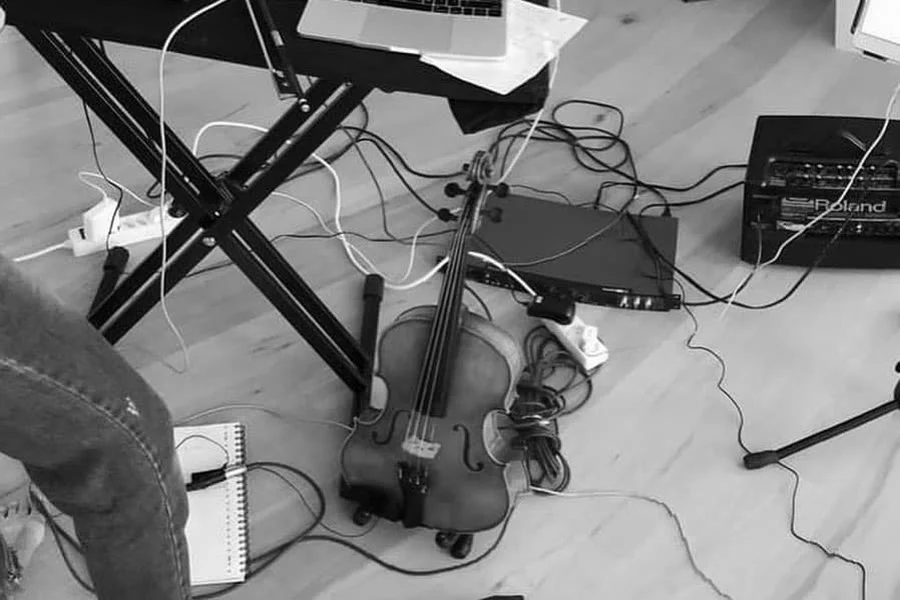
Ainthropos is the first record by StringLAB: one work in three chapters. All original music for string quartet and (ai)live electronics. On stage a machine-learning system performs alongside the four musicians as a fifth member, listening and responding in real time. Nothing is pre-programmed; every musical decision stays human.
Opens in the violence of origin.
Holds the suspended moment of something forming.
The stillness of what remains.
Three chapters, one arc.
Written and produced by Mara Tieles Cutié · Performed by StringLAB, Amsterdam
Released one chapter at a time. First single: to be announced.
The Ainthropos system runs entirely offline, on a single computer on stage. Cloud AI consumes vast amounts of power and water; our system refuses that cost. Built with open tools, the system belongs to the artists who train it: it assists them and obeys them — and it follows them, never the other way around.
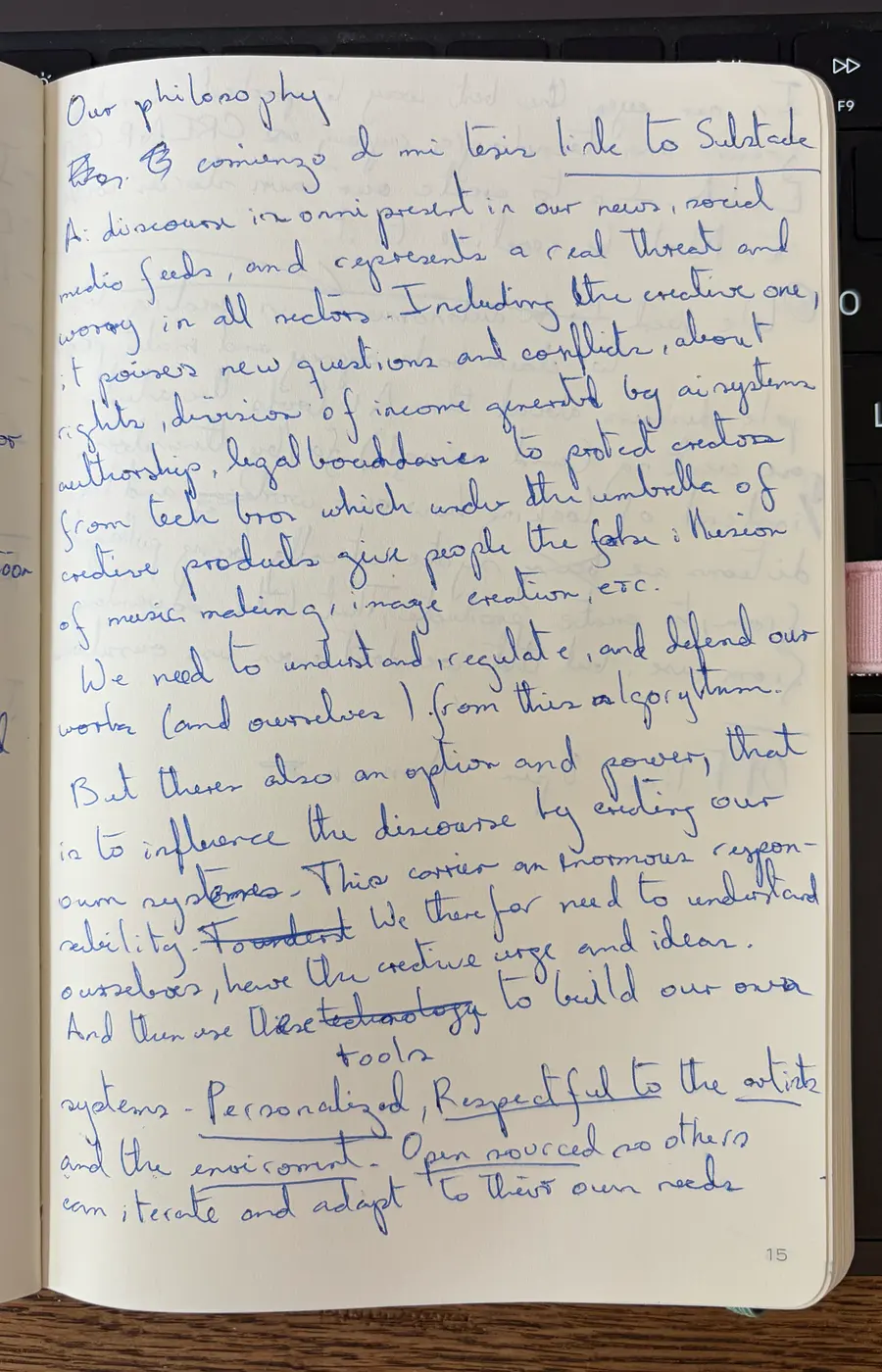
AI discourse is omnipresent — in our news, in our feeds — and it represents a real threat and a real worry in every sector. Including the creative one. It poses new questions and new conflicts: rights, the division of the income generated by AI systems, authorship, the legal boundaries that protect creators from tech bros who, under the umbrella of creative products, sell people the false illusion of music making, of image creation.
We need to understand, regulate and defend our work — and ourselves — from these algorithms.
But there is also another option, and another power: to influence the discourse by creating our own systems. That carries an enormous responsibility. We therefore need to understand ourselves, to have the creative urge and the ideas — and then to use these tools to build our own systems. Personalized. Respectful to the artists and to the environment. Open sourced, so others can iterate and adapt them to their own needs.
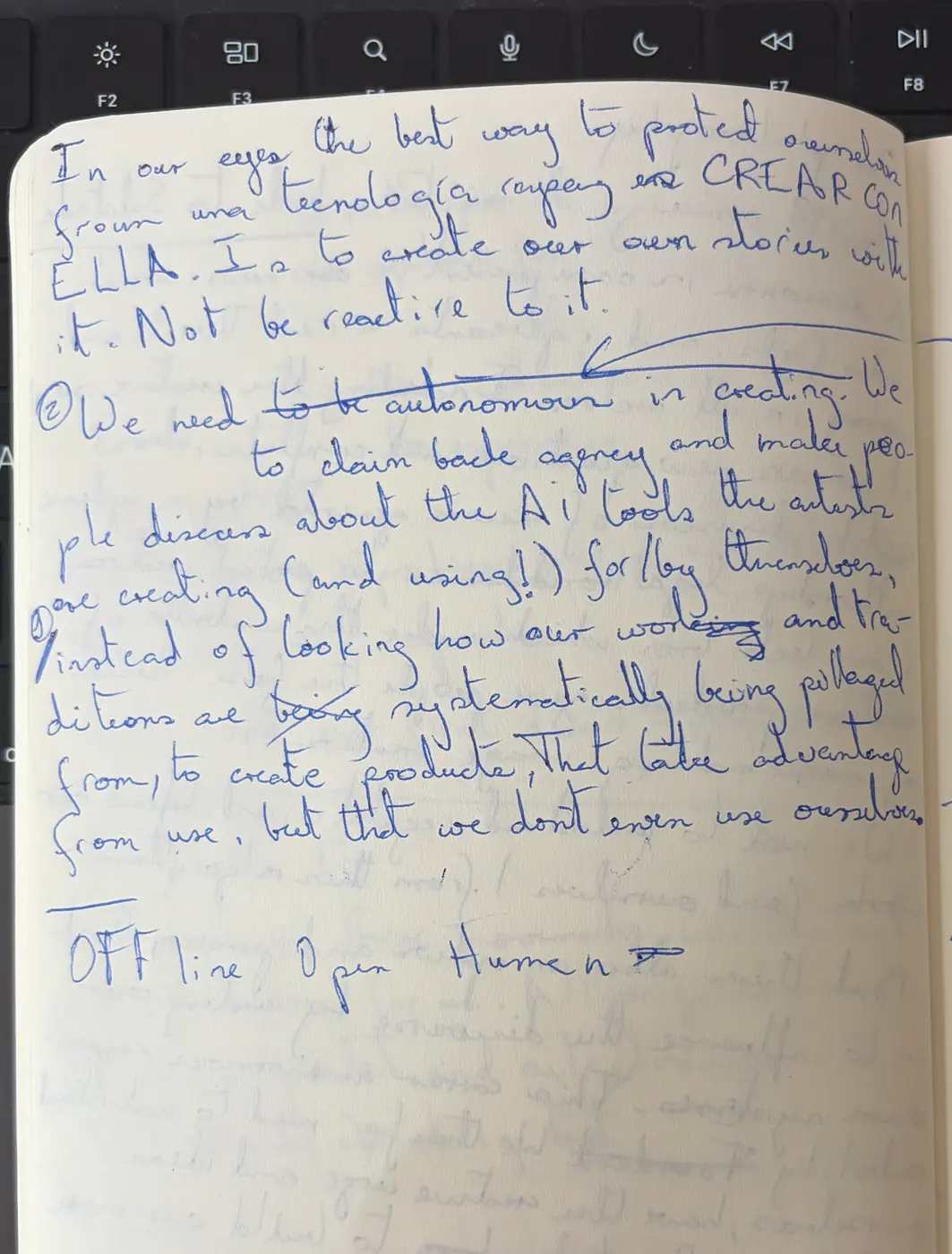
In our eyes, the best way to protect ourselves from a rampant technology is to create with it. To make our own stories with it. Not to be reactive to it.
We need to claim back agency, and to make people discuss the AI tools that artists are creating — and using — for and by themselves. Instead of watching our work and our traditions be systematically pillaged, to make products that take advantage of us, and that we don't even use ourselves.
Everything runs offline, on a single computer. No data goes online; no data centre, no cloud — none of the energy and water they consume.
Open-source tools. The system belongs to the artists who train it, not to a platform.
The players lead. The machine learns to follow; interpretation is never automated.
The workshop behind the work, and a good deal beyond it. Notes on decolonising the spaces where music is made, on what AI puts at risk, and on where creative work comes from. Ainthropos runs through it: a system built to assist the quartet and to obey it.
4 string players, 7 nationalities, 2 producers. StringLAB is the quartet that brings Ainthropos to the stage.
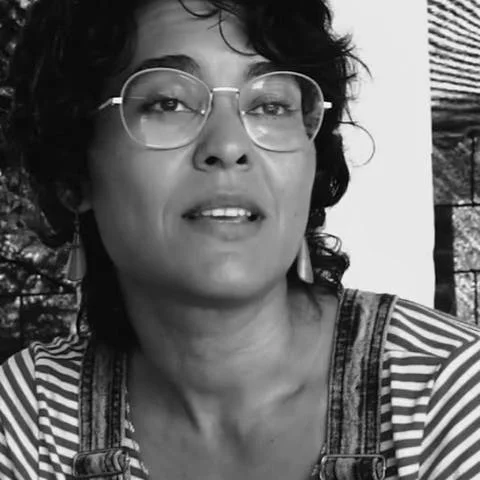
Born in Havana. A violinist who treats new music as a social act rather than a specialism. Based in Amsterdam, she is a founding member of the new-music collective Oerknal and has played with ASKO|Schönberg and Insomnio in the Netherlands and the Blindman collective in Belgium. As a chamber musician she works with Duo Macchiato and Ensemble Montage, and has recorded with Curaçaoan musician Jean-Jacques Rojer. She keeps one foot firmly in Cuba: performance-lectures at the Havana Conservatory, concerts at the Festival de La Habana, premieres of new Cuban works, and outreach work with the Royal Conservatoire The Hague, where she earned her master's degree.
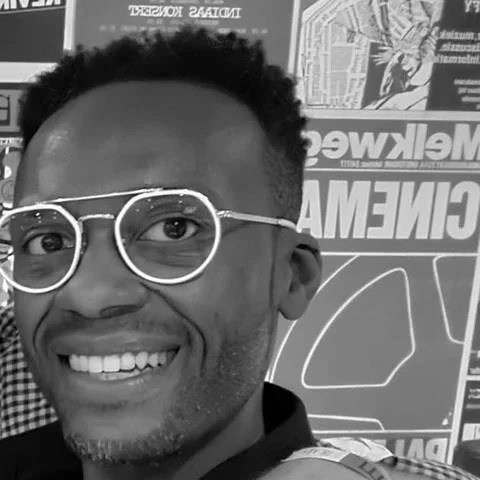
A violinist with an ongoing habit of putting classical music in rooms that were not built for it. Based in Amsterdam, Teddy is a former member of the Verbier Festival Orchestra and the New World and New Jersey Symphonies, often in principal roles under conductors including Michael Tilson Thomas and John Williams. Teddy was a founding member of the Toronto-based Annex Quartet and performed with them alongside the Kronos Quartet in a program of contemporary music at Carnegie Hall. He has also collaborated with artists such as Ed Sheeran, Ms. Lauryn Hill, Delta Goodrem, and Regina Spektor. Teddy is passionate about chamber music and community outreach, and he is not a stranger to performing in atypical venues, such as bars, parks, art galleries, and cafes. In 2018, Teddy created “Music Bites,” an interactive, multi-course dinner concert collaboration in Miami Beach, where every dish on the restaurant menu was carefully prepared to reflect the mood of each piece on the program.

Cuban violist, composer and producer who stopped choosing between the concert hall and the studio. Based in Amsterdam, she has performed and recorded with Snarky Puppy, on the Grammy-winning We Like It Here, and with ROSALÍA, Stromae, José James, the Cinematic Orchestra, the Mondriaan Quartet and Hansjörg Schellenberger, and was principal viola of the European Union Baroque Orchestra. Berklee-certified in non-linear composition for interactive media, she wrote and produced the string material for Elusis, the spatial-audio and haptics project by End of Time. Her master's research produced the Wekinator Etudes, in which a machine-learning system responds in real time to the player's gestures. That research is the foundation of Ainthropos.
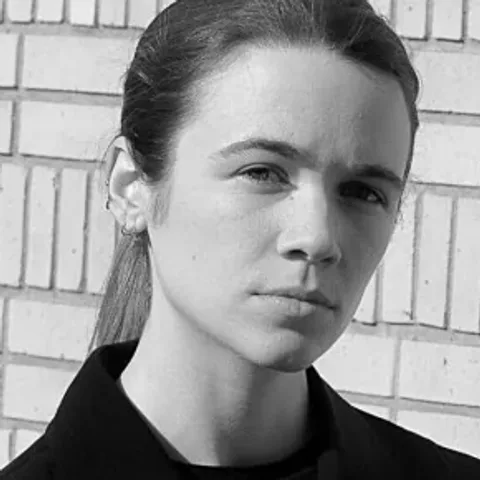
Dutch-English cellist with rigorous classical training that she warps and draws on in her electronic productions. Based in Amsterdam, Emma performs regularly with the Rotterdam Philharmonic, Radio Filharmonisch Orkest, and Residentie Orkest. Her work with electronic music has taken her to the Amsterdam Dance Event and to the Academy Team (DGTL), a collective of emerging female DJs and VJs selected by open call, working towards a presentation at DGTL Amsterdam 2026. Emma is a winner of the Splendor Prize at the National Cello Competition of the Amsterdam Cello Biennale (2022) and the Donemus Prize at the Prinses Christina Competition.
In performance, the system listens to the quartet through microphones and reads the sound as it happens — its weight, its density, its direction. Ainthropos learns from the players in rehearsal: which responses belong to which musical situations. On stage it answers in sound, live, through the electronics.
Nothing is sequenced in advance. The fifth voice exists only in relation to the four in the room.